Does your organization rely on old systems? Your historical data might be at risk, as employees leave with their knowledge, often leaving behind conflicting and untrustworthy information.
Does your organization rely on old data systems? You might be facing what's called 'The COBOL Problem,' which isn't really about a specific programming language, but rather about losing vital knowledge. Imagine having systems that have been running for years, but the people who built them and understood their intricate details have left, leaving behind databases full of information that no one truly understands anymore. This means what you see in the database might just be a list of what someone once knew, but that person is no longer around.
This problem is real and can disrupt daily operations. In one instance, there were two official libraries for project history within the same organization. Both claimed to be the source of truth, but they never agreed. A project title in one was missing from the other, and a contract value in one contradicted the writeup in the second. When they tried to find the origin of these discrepancies, the answer was just a rumor: someone remembered a Word file, a slide, or a person who had left the company. Leadership would point at 'the system' as if pointing would solve the problem, but the stores were full of data, and the past was still an argument.
Imagine trying to answer simple queries like: 'What's the contact-center pattern in a particular region, above a certain contract value, with a named result?' Neither library could answer it. This led the team to gather project descriptions by hand. That's the clear sign of knowledge transfer failure: when people copy titles manually from a system that was supposed to hold them, you're watching information exchange fail in real time. The database still runs, but the handoff never happened.
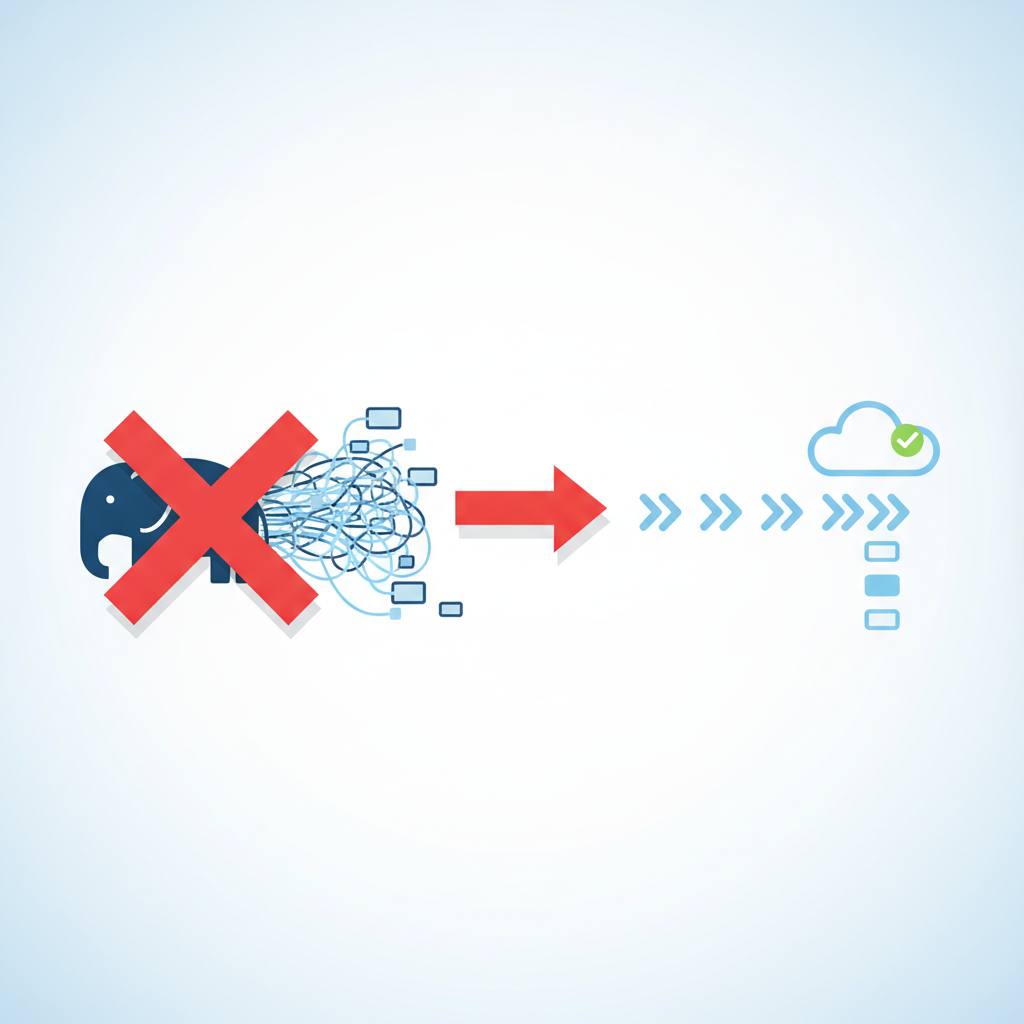
The solution? Stop treating these databases as the sole source of truth. Go back to the source documents themselves: project writeups, published case studies. These are the sources someone already trusted in the past. Instead of drowning in a sea of conflicting data, start from a trusted baseline. By doing so, you can avoid falling into 'The COBOL Problem' trap and preserve your organization's memory.
This problem is real and can disrupt daily operations. In one instance, there were two official libraries for project history within the same organization. Both claimed to be the source of truth, but they never agreed. A project title in one was missing from the other, and a contract value in one contradicted the writeup in the second. When they tried to find the origin of these discrepancies, the answer was just a rumor: someone remembered a Word file, a slide, or a person who had left the company. Leadership would point at 'the system' as if pointing would solve the problem, but the stores were full of data, and the past was still an argument.
Imagine trying to answer simple queries like: 'What's the contact-center pattern in a particular region, above a certain contract value, with a named result?' Neither library could answer it. This led the team to gather project descriptions by hand. That's the clear sign of knowledge transfer failure: when people copy titles manually from a system that was supposed to hold them, you're watching information exchange fail in real time. The database still runs, but the handoff never happened.
The solution? Stop treating these databases as the sole source of truth. Go back to the source documents themselves: project writeups, published case studies. These are the sources someone already trusted in the past. Instead of drowning in a sea of conflicting data, start from a trusted baseline. By doing so, you can avoid falling into 'The COBOL Problem' trap and preserve your organization's memory.